
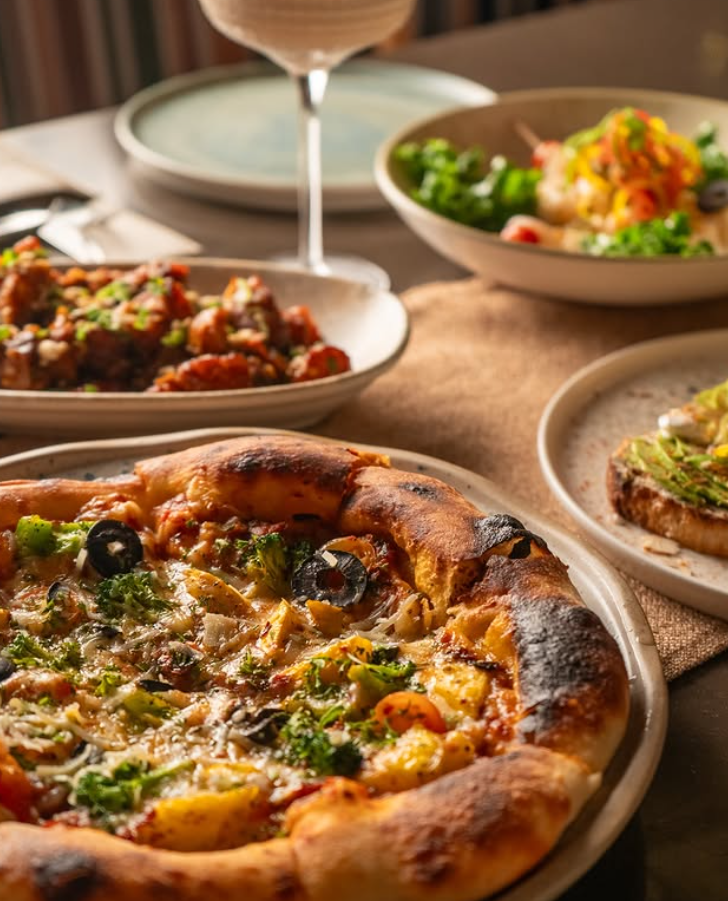
Sourdough pizza dough is leavened with a live wild yeast and lactic acid bacteria culture instead of packet or instant commercial yeast. That single swap changes almost everything downstream: fermentation stretches from a couple of hours to a day or more, the crust picks up a natural tang, and the dough becomes noticeably easier on digestion.
If you've bitten into a slice with a deeper, almost nutty flavour and wondered why it chews differently from a regular takeaway base, the answer starts in the mixing bowl, long before any topping touches the dough. This guide walks through exactly what separates sourdough pizza dough from conventional dough, and why the difference matters for taste, texture, and how your body handles the meal.
What Is Sourdough Pizza Dough?
Sourdough pizza dough is pizza dough leavened with a starter, a fermented mixture of flour and water that captures wild yeast and lactic acid bacteria from the environment, rather than with manufactured baker's yeast. A baker feeds this starter with fresh flour and water on a regular schedule, and over one to two weeks it builds up enough active yeast and bacteria to raise dough on its own.
That's a meaningfully different process from opening a sachet of instant yeast and mixing it straight into flour. A sourdough starter isn't a single ingredient you buy once. It's a living culture that a kitchen maintains indefinitely, feeding it daily or every few days depending on how it's stored. Because the culture contains both yeast (for rise) and bacteria (for acidity and flavour), the dough it produces behaves differently at every stage, from mixing to proofing to the final bake.
This is also why sourdough pizza has genuine historical roots. Before commercial yeast became widely available around a century ago, naturally leavened dough was simply how pizza and bread were made. What's now marketed as a specialty technique used to be the only technique.
What Makes Sourdough Pizza Dough Different From Regular Pizza Dough?
The short answer: leavening agent, fermentation time, flavour, texture, and digestibility all diverge once you compare sourdough vs regular pizza dough side by side.
| Factor | Sourdough Dough | Regular (Commercial Yeast) Dough |
|---|---|---|
| Leavening agent | Wild yeast + lactic acid bacteria starter | Manufactured baker's yeast (instant or fresh) |
| Fermentation time | 12 to 72 hours, often with a cold proof | 1 to 3 hours at room temperature |
| Flavour | Tangy, complex, slightly nutty | Mild, neutral, lets toppings lead |
| Crust texture | Crisp exterior, open, airy, chewy crumb | Softer, more uniform crumb throughout |
| Digestibility | Easier on the gut due to pre-digested starches and gluten | Standard digestibility, no pre-fermentation benefit |
| Kitchen turnaround | Slow; needs planning a day or more ahead | Fast; same-day mixing to bake is standard |
| Consistency | Varies slightly with starter activity and ambient temperature | Highly predictable batch to batch |
The starter is the root cause of every other difference on this list. Because wild yeast is less aggressive than commercial yeast, sourdough needs far longer to rise, and that extra time is exactly what builds the acidity, flavour compounds, and structural changes that regular dough never develops.
How Fermentation Changes Structure, Flavour, and Digestibility
This is the part most pizza blogs skip, and it's where the real difference between sourdough vs regular pizza dough actually gets decided: at the microbial level, hours before the dough ever sees an oven.
Flavour compounds build over time
During a long, cold fermentation, lactic acid bacteria produce organic acids and the yeast produces alcohol and esters. These compounds are what give sourdough pizza dough its characteristic tang and depth. Regular dough, fermented for only an hour or two, simply doesn't have time to develop this complexity. It relies almost entirely on the toppings for flavour.
Gluten and starch break down before you eat them
Independent research backs up what bakers have long claimed anecdotally. A controlled study on sourdough fermentation found that the process altered gluten's protein structure and changed how immunogenic gluten peptides were digested — work that's been published and reviewed on PubMed Central. Separately, prolonged sourdough fermentation has been shown to reduce phytate content in whole-grain dough by roughly 62 to 90 percent depending on method, a change linked to better mineral absorption, according to findings on the National Library of Medicine's PubMed database. Fermentation research has also linked sourdough to reduced FODMAP content, which is relevant for anyone who feels bloated after regular bread or pizza, as detailed in this NIH-hosted study.
None of this means sourdough pizza dough is a health food. It's still refined flour, salt, and water. But the science does explain why so many people report that a sourdough crust sits more comfortably than a fast-fermented one.
Starch digests more slowly
Studies on sourdough bread have also recorded a lower estimated glycemic index and increased resistant starch content compared to yeast-only fermentation, largely because organic acids produced during fermentation slow starch breakdown, per research published on PubMed Central. That translates into a steadier release of energy after a meal, rather than a quick spike.
What Makes Sourdough Pizza Dough Different in the Kitchen
Beyond flavour and digestibility, sourdough behaves differently in the hands of the person shaping it. This is the practical, implementation side of the sourdough vs regular pizza dough question.
Hydration and handling
Sourdough pizza dough is typically mixed at a higher hydration than conventional dough, often 65 to 75 percent water to flour by weight. That makes it stickier and harder to shape for a beginner, but it's also what produces the open, airy crumb and blistered rim that sourdough pizza is known for.
Baking behaviour
Because the gluten structure has already been partially broken down by fermentation, sourdough dough handles high heat differently. It stretches more easily without tearing, but it can also over-proof and lose structure if left too long, so timing matters more than with a dough that's forgiving because it's under-fermented.
Timeline and planning
Regular pizza dough can go from mixing bowl to oven in a couple of hours. Sourdough pizza dough needs a plan: an active starter fed the night before, a long bulk fermentation, and often a cold retard in the fridge for a day or two to develop flavour without over-fermenting. This is the main reason sourdough pizza costs more and takes longer to get right, whether you're making it at home or ordering it at a restaurant.
Sourdough vs Regular Pizza Dough: Which Should You Order?
If you're choosing between the two on a menu, the decision comes down to what you're after. Want a fast, reliable, topping-forward slice where the crust plays a supporting role? Regular dough does that well. Want a crust with its own character, a slight tang, a chewier bite, and a base that's easier to sit with after the meal? Sourdough is the better call.
At Tattva Bar & Café, our kitchen leans into slow, considered preparation across the food menu, and it's the same philosophy that makes a sourdough crust worth the wait. If you'd like to taste the difference for yourself, our food menu is a good place to start, and you can reserve a table ahead of your visit to Andheri East.
Frequently Asked Questions
Q1. Is sourdough pizza dough healthier than regular pizza dough?
Sourdough pizza dough isn't a health food, but it does offer some digestive advantages. Fermentation reduces phytate content and appears to lower the glycemic impact of the starch, which can make it easier to digest than dough made with commercial yeast alone.
Q2. Does sourdough pizza dough always taste sour?
No. The sourness depends on fermentation time, temperature, and how the starter is maintained. A shorter or warmer fermentation produces a mild tang, while a long, cold ferment produces a more pronounced sour flavour.
Q3. How long does sourdough pizza dough take to make?
Most sourdough pizza dough needs 24 to 72 hours from mixing to baking, including bulk fermentation and often a cold proof in the fridge. Regular dough, by comparison, can be ready in 1 to 3 hours.
Q4. Can sourdough pizza dough be made without a starter?
Not really. The starter is what defines sourdough dough. Without it, you're making a long-fermented yeasted dough, which can still taste good but doesn't carry the same lactic acid bacteria activity or flavour profile.
Q5. Is sourdough pizza dough suitable for people with gluten sensitivity?
Sourdough fermentation can partially break down gluten structures, which some people with mild gluten sensitivity tolerate better. It is not, however, safe for anyone with coeliac disease, since it does not remove gluten entirely.
The Bottom Line
Sourdough pizza dough and regular pizza dough start with nearly the same ingredients — flour, water, salt, and a leavening agent — yet they end up as two different foods. The starter is what makes sourdough pizza dough different: it slows everything down, builds acidity and flavour compounds that instant yeast never gets time to develop, and changes how the dough behaves in your hands and in your gut. Regular dough wins on speed and consistency. Sourdough wins on depth, character, and digestibility.
If that's the kind of crust you're after, come taste it for yourself. Check the food menu at Tattva Bar & Café, or book a table in Andheri East and see what a slow-fermented base actually adds to a plate.
Explore more: Read our guide on the best restaurants in Mumbai for lunch or discover how to choose the best bar in Andheri for a perfect evening out.